If you want the layer against your skin to go through the wash every week without hauling a king-size comforter to the laundromat, buy a duvet cover and a separate insert. If you want the bed finished the day it arrives and you would rather not think about it again, buy a comforter. That is the whole decision; everything below is detail on which sentence sounds more like your life right now.
It is a confusing corner of bedding: the words get used interchangeably in American shops, and the two look almost identical once they are on the bed. So, plainly: a comforter is one finished piece, a quilted shell with the fill stitched permanently inside. A duvet cover is an outer shell only — fabric, a closure, and nothing in it until you put something in it. As Casper's explainer on the difference puts it, a comforter is one-piece while a duvet is a two-piece system of insert plus cover.

The comparison, in one table
Nothing here is about taste — it is about how each setup behaves in an ordinary week.
| Duvet cover + separate insert | Comforter used on its own | |
|---|---|---|
| What you buy | Two purchases: the cover set, then an insert | One purchase, finished as it comes |
| Weekly laundry load | Light — flat fabric, fits a normal machine | Heavy — the bulkiest item in most homes |
| How often the bulky part is washed | A couple of times a year | Every time the bedding is washed |
| Restyling the room | Swap the cover, keep the insert | Replace the whole thing |
| Setup effort | Stuffing the insert, corner tabs, zip | None — unfold it onto the bed |
| Care effort overall | Low, once assembled | Moderate to high |
| Best for | Hot sleepers, allergies, small washers, anyone who redecorates | Guest rooms, kids' beds, first apartments, low-fuss households |
Why the laundry argument is the real one
Almost every guide frames this as a style question. It is not. It is a laundry question, and once you see it that way the answer picks itself.
Bedding needs washing more often than most people assume. Dermatologists quoted in the Ohio State Wexner Medical Center's guidance on washing sheets put sheets on roughly a weekly cycle. Duvet covers sit in the same family — commonly every three to four weeks — while an insert protected inside a cover needs a wash a couple of times a year. A bare comforter gets neither concession: without a cover it is the sheet layer, taking the body oils, the hair product and the night sweat, so it goes through the machine on close to the sheet schedule. A Queen or King comforter is an awkward thing to wash at home.

There is an allergy dimension too. The Asthma and Allergy Foundation of America's bedroom allergen guidance recommends washing bedding weekly in hot water — around 130°F / 54°C — to kill dust mites, a threshold echoed in mainstream medical advice. That matters here, because most decorative bedding, ours included, carries a cold-wash care label to protect colour and fabric. Those two pieces of advice genuinely conflict, and it is worth being honest about that rather than pretending otherwise.
The practical resolution: follow the sewn-in care label to protect the fabric, and lean on the dryer for the thermal part. Research in the Journal of Allergy and Clinical Immunology on hot tumble drying and mite survival in duvets supports high-heat drying as an effective step, and a wash cycle removes allergen residue mechanically even when it never reaches mite-killing temperature. A cover makes this easy in a way a bare comforter does not: covers are light and quick-drying, so a hot tumble is uneventful. None of this is medical advice — a diagnosed dust mite allergy is a conversation for a doctor.
Choosing the cover: three fabrics, three different weeks
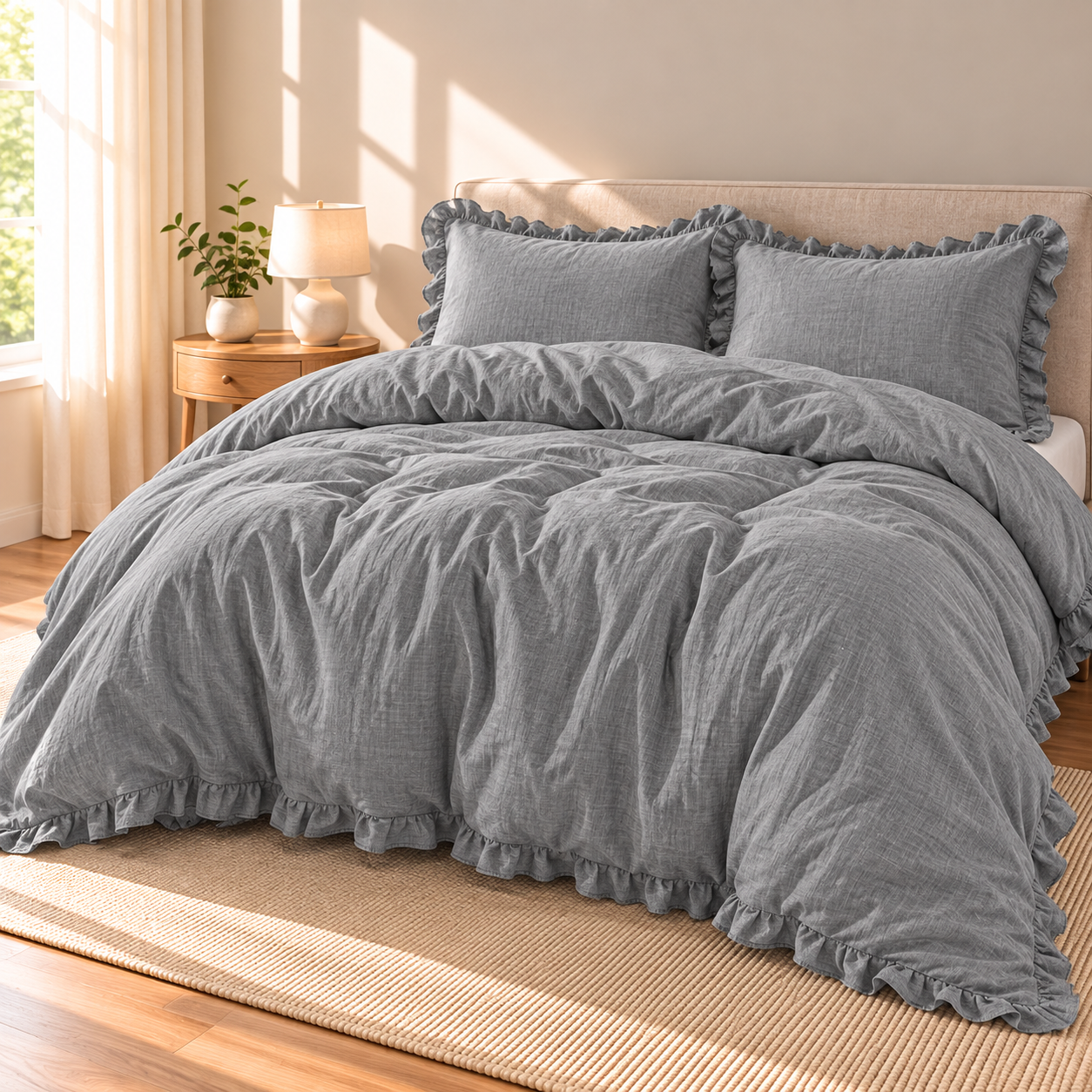
If the two-piece setup is yours, the cover is where it gets interesting, because it is the part you see and touch. Our duvet cover range runs to over fifty active designs, but three families carry most of it.
Solid microfiber is the workhorse and the entry point of the range: the white listing calls it the easiest base we sell — lightweight, quick-drying, easy to wash on a busy week — in twelve colourways, more than any other family.

Seersucker, in nine colourways, trades a little of that plainness for a puckered woven texture. Its useful trick is written into the description: the texture hides creases, so no ironing. For anyone who wants the bed to look made without doing anything to make it look made, that is the quiet winner.
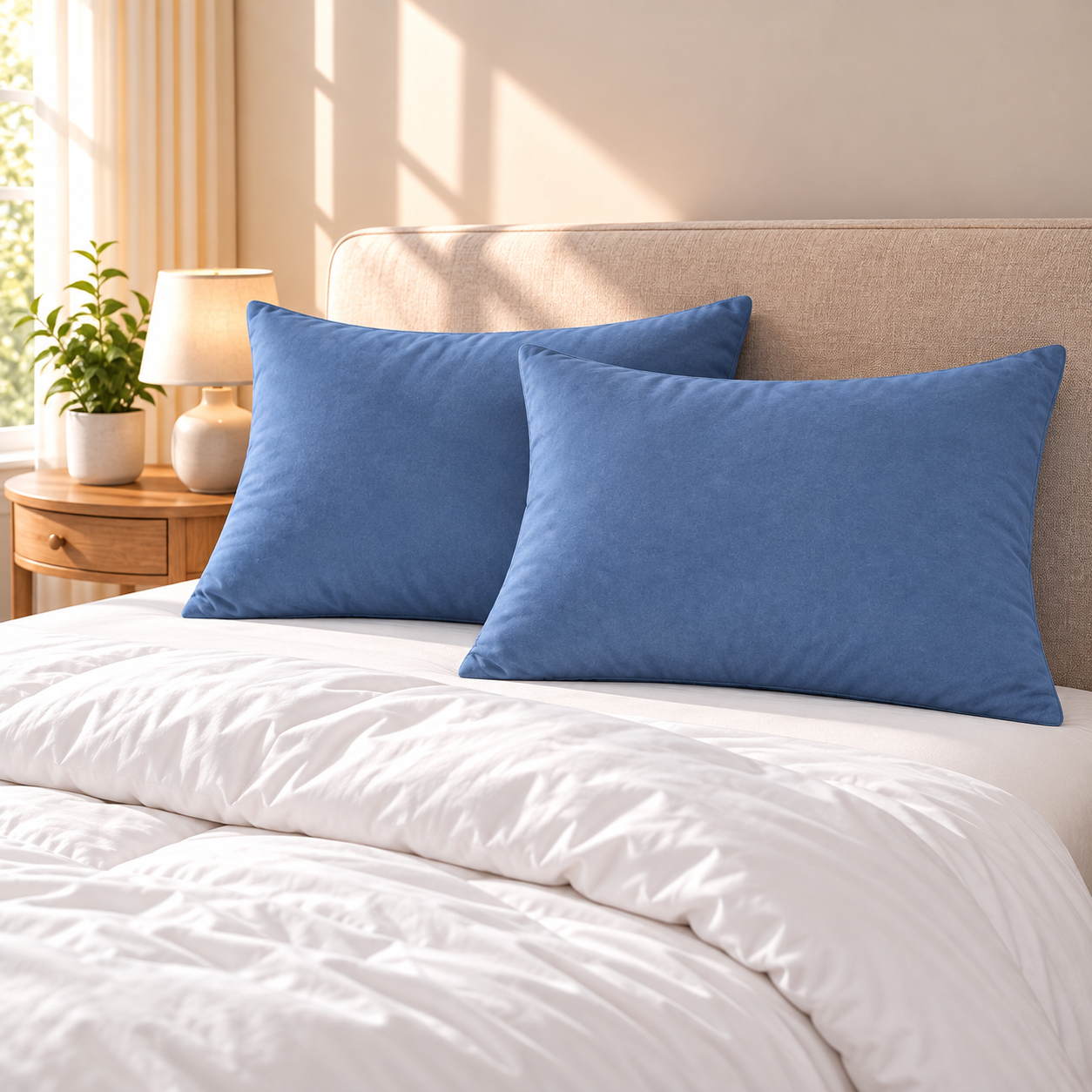
Flannel velvet is the heavy end — eight colourways, a brushed plush surface, and a full-length zip that keeps the insert in place and out of sight. It is the priciest of the three families and unmistakably a cold-months choice. We went into how this kind of weight fits a seasonal bed in our guide to building a warmer bed one layer at a time, worth reading alongside this if you are changing the bed over for autumn.

All three are three-piece sets — cover plus matching pillowcases — in Twin, Queen and King, and all three say the same critical thing in the listing: the comforter insert is not included. Read that line twice — it is the most common bedding ordering mistake, and a miserable one to discover at eleven at night with a stripped bed.
The insert, and the case for down alternative
Our All-Season Down Alternative Comforter is built to work both ways, which quietly resolves much of this argument. It is quilted so the fill stays evenly spread, with corner tabs that anchor it inside a cover instead of letting it migrate into a lump by morning. Use it bare and it is a comforter; put it in a cover and it is an insert.

Fill type matters more than people expect. Synthetic down alternative is machine washable at home, whereas wet natural down is heavy enough that most care guidance sends you to a commercial machine. For a household without a large washer — most households — that decides it. Our care instructions ask for a cold gentle cycle and a low tumble dry with dryer balls to keep the fill lofty, following the sewn-in label first.
When the all-in-one set is genuinely the right answer
None of the above makes the one-piece route wrong. There are beds where the answer is unambiguously "buy the box and be finished": guest rooms, kids' rooms where the bedding will have a hard life regardless, a first apartment where nothing matches yet — and standing in a stripped bedroom at eleven at night not wanting to hunt for a sheet that coordinates. Our Bed in a Bag Comforter Set answers exactly that: a diamond-quilted all-season comforter, sheets and pillowcases together in brushed microfiber, already coordinated. It is the most expensive single item in the comforters collection, and the only one that finishes a bed on its own.

On cost: the two-piece route is not automatically cheaper, because you are buying two things instead of one. The saving shows up later, in the years where you restyle by swapping a cover instead of replacing the whole top layer. Prices move, so compare today's in the duvet covers collection and the comforters collection rather than trusting a number in an article.
The part that is not really about bedding
There is a reason we keep coming back to laundry rather than thread counts. When the top layer is something you dread washing, it slides — a week, then three, then you stop noticing. When it is a cover that goes in with the sheets on a Sunday, the bed stays somewhere you want to be. That is the same logic as picking a sheet fabric for how you sleep rather than how it photographs, which we worked through in our side-by-side on bamboo rayon versus satin sheets. Rest is not a luxury purchase; it is a maintenance habit, and the setup that survives a hard week is the one that was easy to begin with.
So: two pieces if you want the bed to keep up with you, one piece if you want it handled. Both are correct. Only one of them is correct for your washing machine.
And once you have chosen the cover and it is on the bed, the other half of the job is keeping it that way — our care guide to washing a duvet cover and getting the insert back in walks through the cold-wash rules for each of these three fabrics, and the ninety-second burrito roll that stops the insert bunching into a lump overnight.
Whichever way you land on the top layer, it is only one of five, and the rest of the bed decides how well it works once the weather turns — our five-layer method for a winter bed covers what sits under the comforter, what goes over it, and why a cool room with warm layers beats a warm room every time.
Duvet covers and comforters: your questions answered
What is the difference between a duvet cover and a comforter?
A comforter is one finished piece of bedding — a quilted shell with the fill sewn inside, ready to put on the bed straight out of the box. A duvet cover is only the outer layer: a fabric shell, usually with a zip closure, that a separate comforter or duvet insert slides into. So a comforter is a one-piece setup and a duvet cover is half of a two-piece setup. Every Calm Cloud duvet cover set states plainly that the comforter insert is not included, because the most common bedding mistake is buying the cover and discovering on the night it arrives that there is nothing to put inside it.
Do I need to buy a comforter insert separately if I buy a duvet cover?
Yes. A duvet cover on its own is an empty shell, and our duvet cover set listings say so directly: the set gives you the cover plus matching pillowcases, and the insert is a separate purchase. If you already own a comforter, check that it has corner tabs — small loops at each corner that tie to the cover and stop the fill from sliding into a lump at the foot of the bed overnight. Our All-Season Down Alternative Comforter is built with those tabs, so it works either as a standalone comforter or as the insert inside a cover.
How often should you wash a duvet cover compared with the comforter inside it?
Treat the cover like your sheets and the insert like a coat. Guidance collected from dermatologists suggests washing sheets roughly weekly, with duvet covers every three to four weeks for most households, while a comforter or duvet insert only needs washing a couple of times a year if it has been living inside a cover. That gap is the whole argument for the two-piece setup: the layer touching your skin goes through the wash often, and the bulky part that is hard to fit in a home machine mostly does not have to.
Can you use a comforter without a duvet cover?
You can, and plenty of people do — that is what a comforter is designed for. The trade-off is laundry. Without a cover, the comforter itself is the layer absorbing body oils, hair product and night sweat, so it has to go through the washing machine far more often, and repeated full-size washes are harder on quilted fill than washing a lightweight cover. A down alternative comforter handles this better than natural down, because synthetic fill is machine washable at home while wet down is heavy enough that most guidance sends you to a commercial machine.
Which setup is better if you have a small washing machine?
The duvet cover setup, comfortably. A duvet cover and its pillowcases are flat, lightweight fabric that will fit in almost any domestic drum, whereas a Queen or King comforter is the single bulkiest item in most homes and can overwhelm a small washer. If you buy a comforter and use it bare, you are committing to wrestling that bulk through your machine regularly. If you keep it inside a cover, you wash the cover on your normal sheet cycle and the comforter only occasionally.